
Banshee

Perhaps its just egocentrism on my part, but I find Irish mythology one of the most fascinating forms of mythology often discussed. If I had to give a real reason beyond just being Irish myself though, I'd say one of the best virtues of Irish myths is the long documentation of them across history, that includes not just our ancient, Iron Age myths, but also folklore retellings dating across post medieval period to the modern day. This extensive record keeping means Irish myths are often like the rings inside a tree trunk, containing layers upon layers of their past history, allowing one to trace back any myth from its modern conception back to its most distant roots, providing a remarkably clear timeline for the evolution of what might initially seem a fairly straightforward piece of folklore. To back up my case, let's take a look at one of the most iconic Irish myths, the banshee.
The origin of the name 'banshee', is surprisingly mundane. Truthfully, the word, in the original Irish, breaks down into the words 'bean' and 'sidhe', which essentially translates out to 'fairy woman'. This is interesting in a way, as it implies that the banshee is less of an independent creature in its own right, but a role that any woman from the Otherworld could assume. If so, there's no mystery regarding the role banshee take, which is clearly that of a mourner.
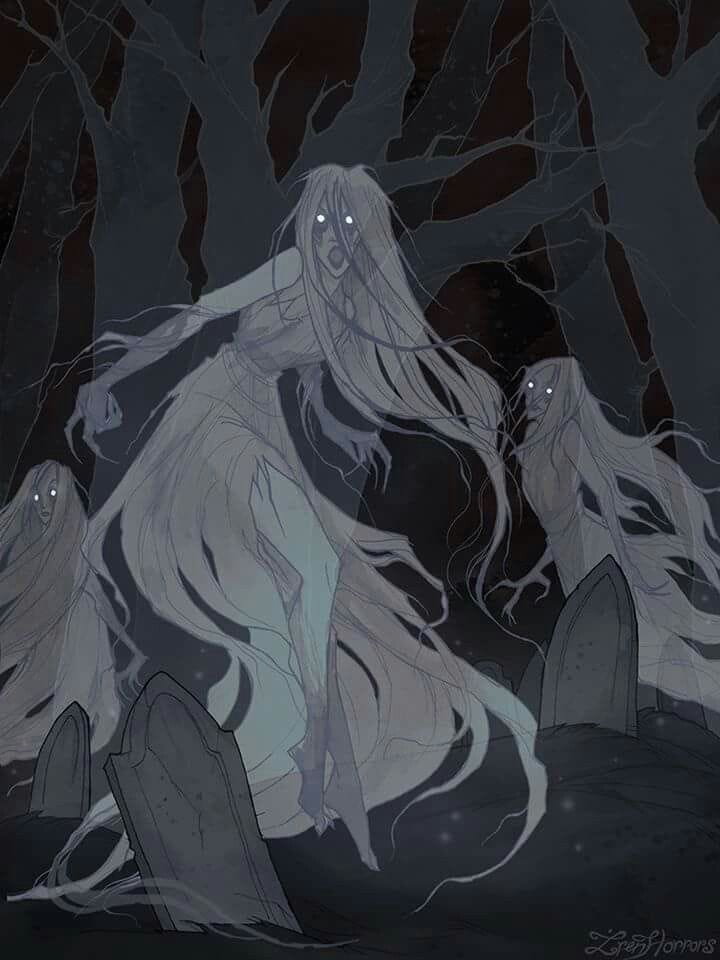
Exact descriptions of the banshee's appearance seem to vary depending on the retelling, but can generally be either beautiful young women, or decrepit crones, often wearing a veil or grey cloak. They are also sometimes described with reddened eyes from over-weeping, which, given their traditional role, suggests they have much to mourn. Indeed, in traditional myth, banshee usually manifest when a member of a chosen household had died or is about to die.
It is here that the classic banshee shriek comes into play, as they communicate this warning by shrieking, while remaining out of sight of the recipient, usually screaming from outside the house or across the glen. This shriek in fact ties into a common Irish practice in antiquity, known as keening, wherein a traditional part of the burial process after a death involved one or more women wailing out a mournful song to express the collective grief at the passing. This was considered an essential role at funerals, to the point where some women would be paid to keen during burials (presumably for those for whom mustering grief was...difficult).
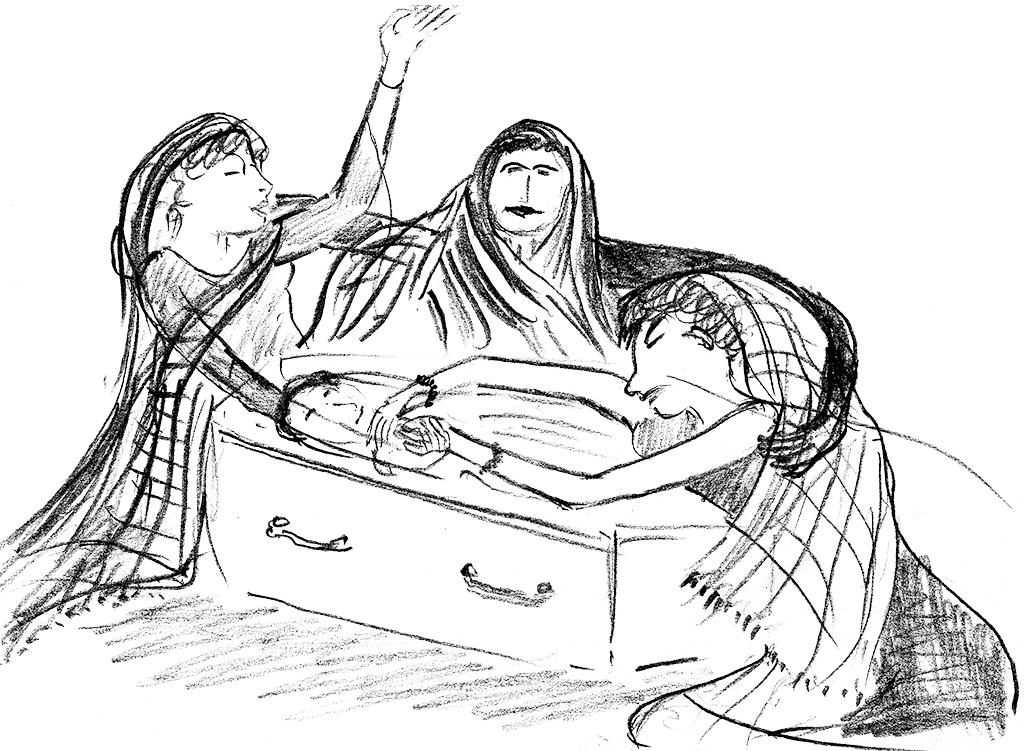
Aside from implicitly taking on the role of keening during a death, the keening of the banshee was also sometimes intended not as mourning, but as a warning. While the most common variation of the banshee tale typically revolves around someone hearing her keening in the middle of night, then soon after discovering a member of their family or local community has died, some tales contrast this . Further, there have been accounts, reported by W.B. Yeats, of entire choruses of banshee manifesting to herald the death of someone particularly great or holy. Others yet manifest alongside the death coach, another popular Irish omen of death, wailing as the coffin-carrying coach rides up to the unfortunate's door, spilling out blood on anyone brave enough to open it.
The question no doubt arises how a banshee picks its intended recipient, as clearly Ireland is not beset by constant screaming as people pass across the country. The common folklore explanation of this is that banshee pick specific families to follow, and more specifically, families of 'pure' Irish descent (presumably, this is what disqualifies my mongrel half-English self!). It's these families that recording hearing the banshee's keening when one of their own passes, even if said passing happened miles away. In the case of some prestigious families, such as O'Brien clan, founded by Brian Boru, their banshee is not only named (the name being Aibell), but is considered a noble in her own right, ruling over Craig Liath, a mountain overlooking the River Shannon.
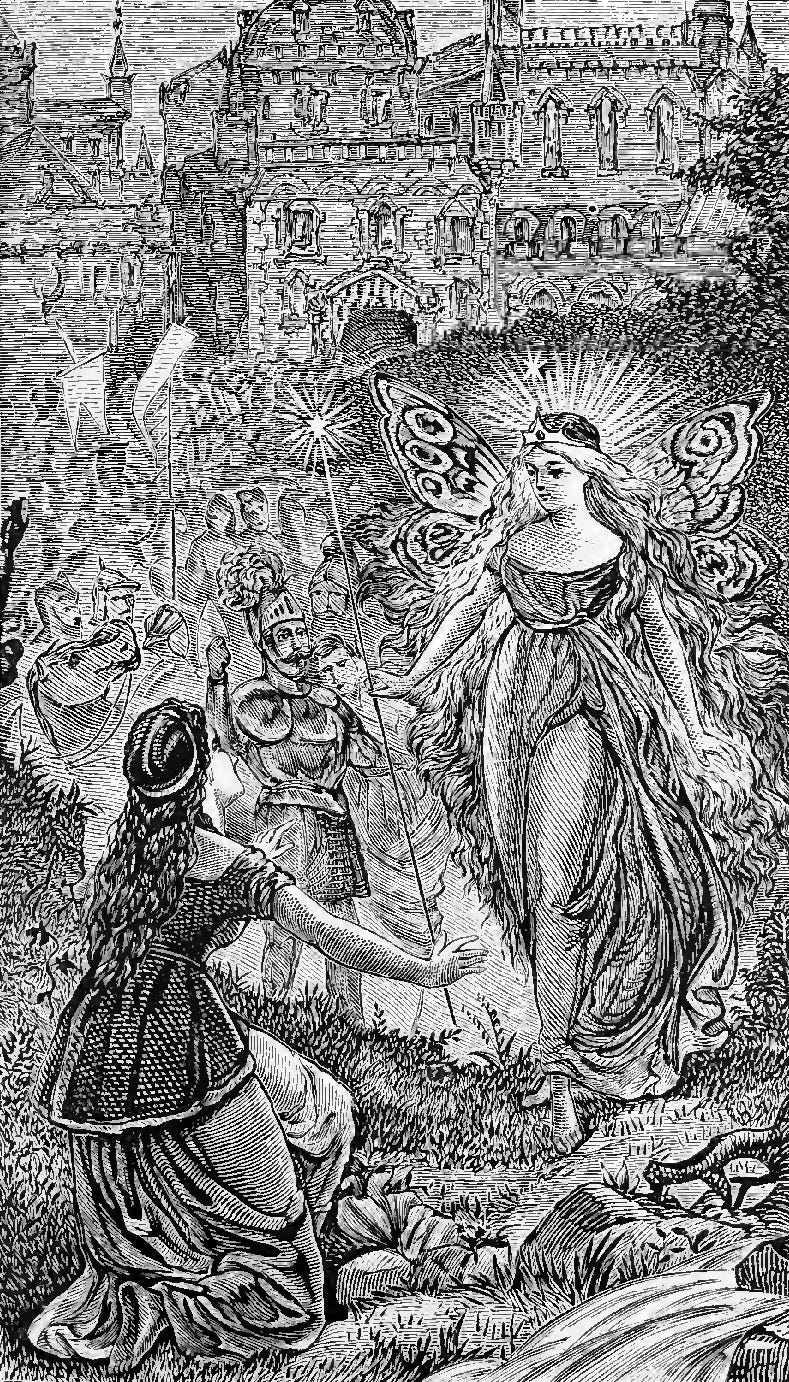
Aibell is far from the only instance of an identified leader among the banshee, the most famous of which being the Irish goddess of love and beauty, Clíodhna. Aside from the already lofty titles of goddess of love and member of the Tuatha Dé Danann, Ireland's local gods and early form of what we now consider the Sidhe, Cliodhna was also the queen of the banshees. As a banshee, Cliodhna is said to patronise multiple families, including the MacCarthys, the O'Keeffes and Fitzgeralds, the O'Keeffes in particular having even claimed descent from her.
In modern depictions, there can often be a level of ambiguity whether the banshee is a fairy or a ghost, many stories favouring the 'ghost' interpretation. Though the original banshee was definitely considered sidhe, this ambiguity is understandable, as old Irish faiths usually held that the land of the dead and the Sidhe 'Otherworld' were one and the same, to the point that the common crossing points between this world and the Otherworld were old burial mounds and grave markers. Perhaps then, its only natural that the banshee would lean into this uncertainty. Though they are not necessarily the souls of the dead, the banshee are beings from the land of the dead, and perhaps that's enough to consider them ghosts.
Stories of beings similar to the banshee are not limited to Ireland. In Scotland, she is known as 'Caoineag' or 'Weeper', and foretells the deaths of members of her chosen clan by wailing near waterfalls or glens, especially when said clan is about to go into battle. In other tales, Caoineag will approach a house on the verge of a death by illness, and wail outside until placated with gifts of clothing, but if interrupted by force will smack the offender with a wet linen, with the slight side effect of rendering their legs useless. A similar being is observed in Welsh folklore, in the form of the cyhyraeth, notably having even less physical substance than the ghostly banshee, existing only as a disembodied voice moaning in a way similar to the groans of a deathly ill person, again to foreshadow an imminent death. When the cyhyraeth does manifest physically, it is along the coast prior to a shipwreck, as an orb of light similar to the classic will-o-the-wisp.
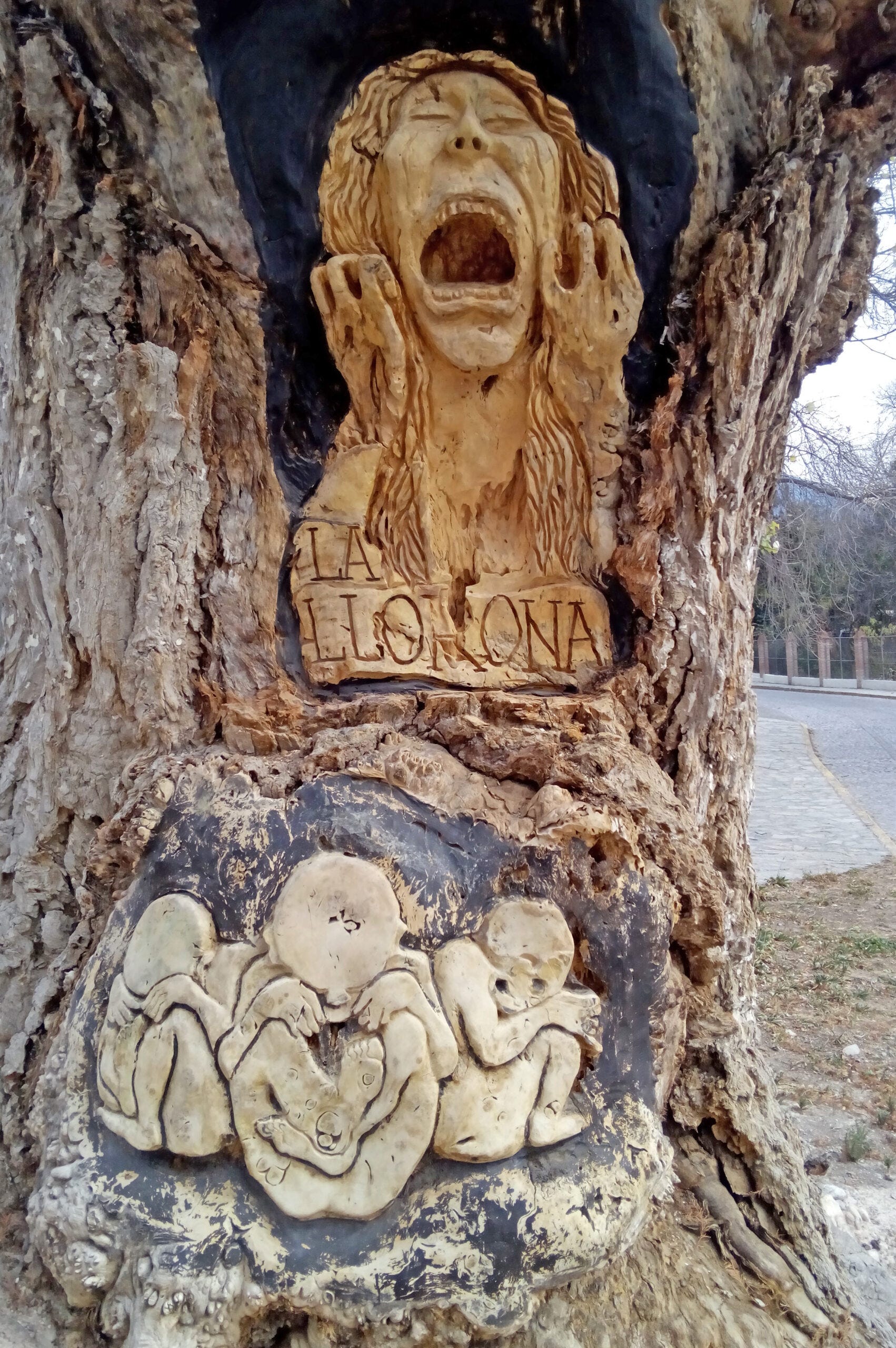
Even further afield, there’s the German Klagmuhme, who distinguishes herself by appearing in a variety of forms, from the ghostly old woman you’d expect, to a howling black dog, or a gigantic, possibly three-legged sheep, but always wails outside a family’s home to foretell an omen of tragedy and heartbreak. Meanwhile, Mexican folklore tells of La Llorona, a vengeful ghostly woman, who wails for her lost children, with those who hear the wailing being doomed to a life of failure and suffering, and who’s tale is theorised to descend from even earlier Aztec legends, such as the goddess of motherhood, Cihuacōātl.
What is interesting about this is that it appears that the legend of the ghostly woman who either foretells or brings tragedy with her wailing connects to some deeper universal idea, one which was able to appear relatively independently across several cultures. Of course, ghost stories about vengeful or mournful female spirits are a rife source of mythical beings by themselves, and no doubt share a common thread with the banshee myth. Additionally, these stories may have in part come about as explanation for the cries of barn owls or other animals with haunting cries at night.
At a certain point, of course, we can’t just ask what the rational explanation of a myth was. We must also consider the irrational element, such as why the shriek of a barn owl made people conjure images of a spectral woman warning them of impending doom. In the case of the Irish banshee at least, we can likely trace it back to the shriek reminding listeners of the keening of mourners, especially in harsher times were death was rife and seemed to always be lurking in wait, ready to claim another neighbour or family member.
To tie this all back to the beginning of the article, this is what fascinates me most about Irish folklore. Thanks to our good fortune of possessing extensive records of both our myths and our past customs, it is possible to examine an image as haunting as the banshee, and yet understand not only how that image came about, but what it meant for those who conceived of it.
In times of death and hardship, few sounds are as heart-wrenching as the cry of a widow or mother mourning her lost loves, and such a sound would leave a mark of any who heard it. Is it hard to imagine that anything that reminded the listener of that sound could in turn be interpreted as a warning of more death to come?
https://folklife.si.edu/magazine/irish-banshee
https://www.collectiveinkbooks.com/blogs/moon-books/chapter-5-aoibheall/
https://emeraldisle.ie/queen-of-the-banshees
https://irishmyths.com/2022/07/25/banshee/
https://blogs.loc.gov/folklife/2021/10/la-llorona-an-introduction-to-the-weeping-woman/
https://www.wired.com/2014/06/fantastically-wrong-wailing-banshee/