
Leprechaun

Maybe it’s a little typecast-ed for an Irishman to start a blog about mythology with an entry on the Leprechaun, but I figure I might as well start with something close to home, especially seeing as the Leprechaun is one of those mythical creatures that has seen dramatic changes over the centuries.
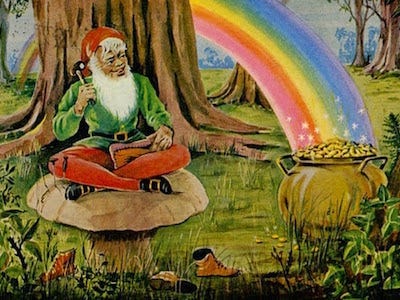
While many mythical creatures suffer from being overlooked or ignored in the modern age, Leprechauns almost have the opposite problem. The moment you saw this entry, a clear image of a little man with a red beard and green clothes flashed in your mind, maybe even sitting on his legendary ‘Pot O’ Gold’. As you may have already guessed, this image drifts significantly from the original mythological roots.
In Irish folklore, the Leprechaun, or “lúchorpáin”, meaning ‘tiny body’, are whimsical, unpredictable members of the Sidhe, or fairies for the uninitiated. The earliest known recording of the creature comes from the medieval text ‘Echtra Fergus mac Léti’, where in Fergus Mac Leti, king of Ulster, is ambushed by three leprechauns, who attempt to drag him into the sea, only for him to catch one in each hand, and
one, apparently, in a feat of amazing pectoral control, in his breasts. In return for their freedom from his crushing pecs, Fergus extorts three wishes from the leprechauns, not quite a pot of gold, but the connection of compelling favours in exchange for freedom is clearly already present.
Outside of this tale, leprechauns appear to have been most famous as cobbler spirits, assisting in shoe-making, known less for wearing garish green jackets and top-hats and more the cocked hat and leather apron of the common workman. This, perhaps, cement their position of recognition among the Irish. After all, the lords of the Aes Sidhe and the gods of the Tuatha De Danaan were distant, mystical figures, while any cobbler could probably profess to have having heard a leprechaun tapping away in the night. While many Irish myths were distant, the leprechaun lived among us.
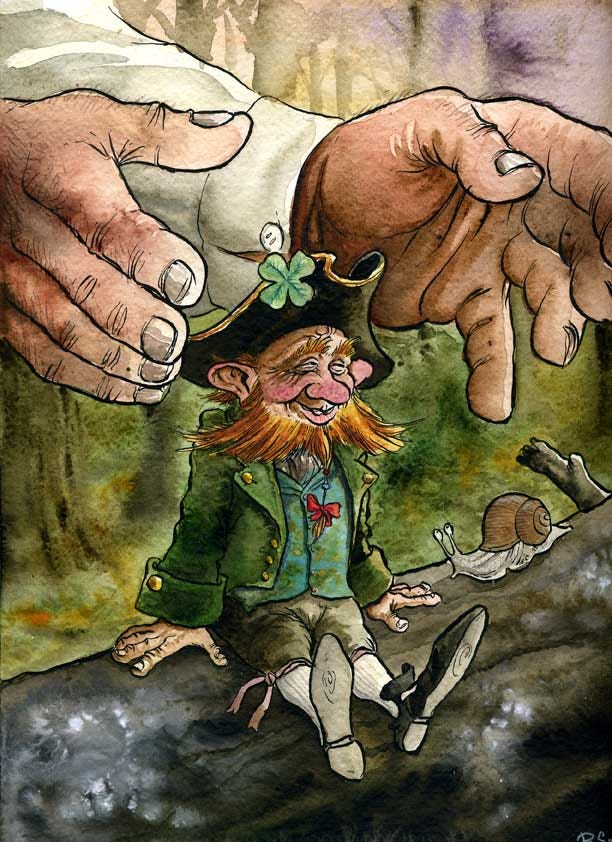
This humble working-man image would seem to clash with the impression that all leprechauns had hidden stashes of gold (maybe sidhe pay more for shoes than we do?), but all the same, many folk tales cover the classic mold of capturing a tiny man to extort his life savings from him. In said stories, it is always agreed that one must keep their eye on the leprechaun at all times, as he can seemingly only whisk himself away if he’s unwatched. Though the leprechaun was often caught in these stories however, successfully making off with his treasure was another story.
Beyond just being cobbers, leprechauns were notorious tricksters, and these tales showed their devious cunning. For instance, in the tale of the Field of Boliauns, the strapping lad Tom Fitzpatrick manages to wrangle one of the wee men, compelling the leprechaun to show him the field where his gold is hidden.
Thinking cleverly, Tom marks the spot with a ribbon, only releasing the leprechaun after he promises to leave the ribbon be. After leaving and returning with a shovel, however, Tom discovers the leprechaun has covered the entire field with ribbons, left only to curse the leprechaun in impotent frustration. Similarly, another tale has a young girl manages to snatch and shake down a leprechaun, only to be tricked into looking away when the leprechaun conjures the illusionary sound of a swarm of bees.
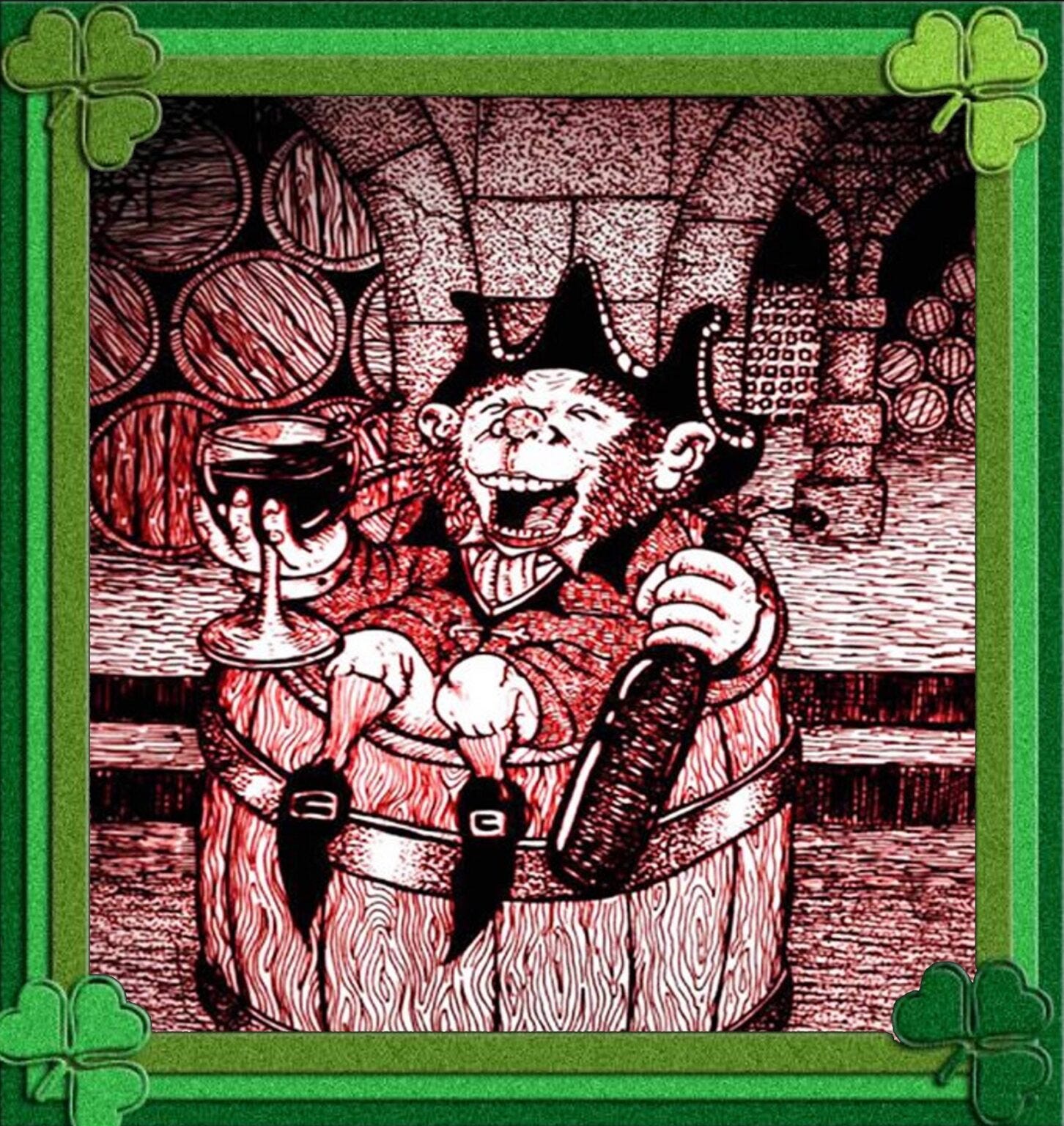
As wellbeing cobblers and tricksters, leprechauns were also part of an extended family of fae creatures, varying in temperament, but falling under the same umbrella of ‘mischievous tiny men’. The most famous of these is the clúrachán, who mainly differ from leprechauns by haunting wine cellars, breweries and other sources of alcohol, which the clúrachán takes full advantage of to get completely plastered.
Also unlike leprechauns, most stories of clúrachán depict them as minor nuisances, pranking their hosts while drinking their cellars dry, though occasionally are claimed to assist in household tasks if amenable. Aside from these differences, clúracháns and leprechauns are similar enough in appearance and abilities that the two are often conflated, or, as W.B. Yeats claims, simply considered a leprechaun with a drinking problem.
How exactly this early image of the leprechaun evolved into the twee, green jacketed ginger men most are familiar with isn’t entirely clear, but appears to have developed sometime in the 19th century, coinciding with the mass arrival of Irish immigrants to the United States in the wake of the Great Famine, who often arrived wearing at the time outdated clothing such as buckle shoes. Combine that with the original red jacket turning green, Ireland’s national colour, it would seem to suggest that the modern image of the leprechaun was birthed not from an evolution of Irish perception of the leprechaun, but from other cultures’ perceptions of the Irish.
There’s really no question of what impact the modern image of the Leprechaun has had on the modern world, for better and worse, as anyone who’s ever seen a St. Patrick’s Day parade can attest. From Dublin to New York to Tokyo, the funny little man in the green coat and top hat has become synonymous with Irish culture, despite many of our own ambivalence towards the wee fecker. Despite some fears about their resemblance to some 18-19th century anti-Irish propaganda, the bigger issue with leprechauns for the Irish today is not so much their offensiveness, as their tackiness. Bring up the leprechaun to a modern Irish listener, and they’re more likely to roll their eyes than anything else.
Still, as the comedian Dara O’Brien put it, while Irish culture may be more reserved and cynical than the stereotypes depict, we’ll ‘sell you sentiment till the cows come home.’. The mere existence of the piles of leprechaun themed merch in our gift shops is proof of that, and perhaps . This certainly isn’t limited to the homefront, as even in America, the seemingly caricaturist nature of Notre Dame University’s ‘Fighting
Irish’ football team and their leprechaun mascot was born not from anti-Irish mockery, but from stubborn Irish-American resistance in response to their experience of harassment and intimidation from the Ku Klux Klan. If the leprechaun was ever a symbol of Irish mockery, it is one we have thoroughly co-opted and reclaimed, even if for twee purposes.
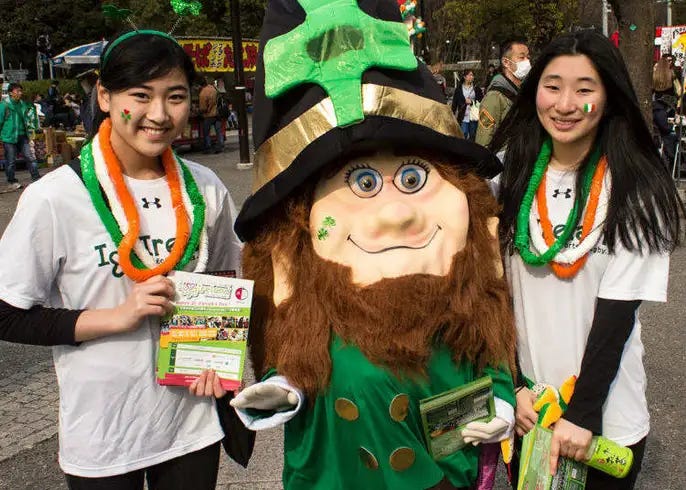
Cartoony abstraction aside, the leprechaun’s greatest gift to the Irish is simply perhaps the gift of recognition, and a symbol to rally behind in hard times. In my view, that’s certainly worth more than any pot of gold, and perhaps even worth the price of seeing some truly naff costumes every year.
https://www.britannica.com/art/leprechaun
https://mythus.fandom.com/wiki/Leprechaun
https://irishpagan.school/leprechaun-irish-myth/ https://www.worldhistory.org/Leprechaun/
https://www.newworldencyclopedia.org/entry/Leprechaun
https://group.irishecho.com/2011/02/78-years-ago-notre-dame-battles-the-kkk-3/