
Sewer Alligators

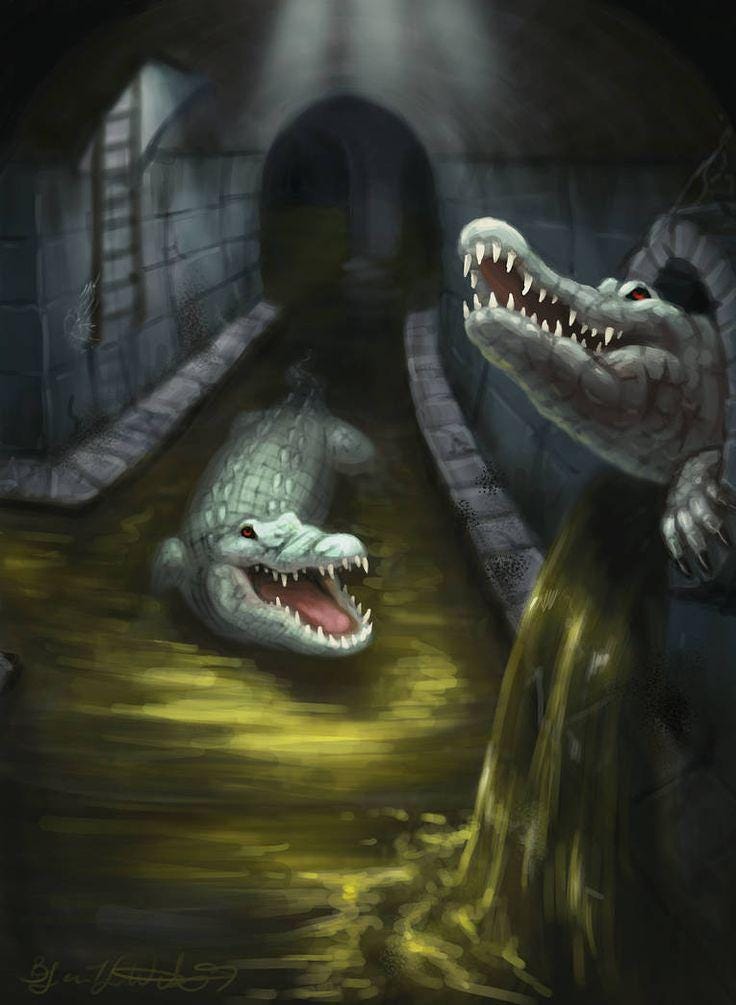
It’s no secret that animals have had to adapt to human environments.
Pigeons thrive on our streets and roofs, urban foxes rummage through our bins, and rats frankly go without saying. As urbanism has stretched more and more across the globe, nature has tried to adapt as best as it could.
That said, all this is happened on the ground level of our cities. What about the sewers? What life has managed to eke out an existence in the vast rivers of human waste constantly moving under our feet?
I’m not sure myself, but one answer has stuck around with surprising resilience.
Anyone with even a passing interest in urban legends has probably heard about sewer alligators, but even if they hadn’t, the name alone probably gives enough of a clue. Indeed, stories about alligators being found in the vast sewer systems of major cities have been around for close to a century at this point, the earliest accounts dating back to the late 1920s. One of the most popular cities to cite for this is New York, and is likely the city that originated the urban legend, though the rumours have long since spread to other cities in both the US and other countries, Paris being another common city cited in the legends.
Naturally, this raises a lot of questions, not least being how the alligators would even get down there. Accounts vary, of course, though in the oldest stories, they were originally exotic pets bought from Florida, a common sight in Florida souvenir shops during the 20th century. These pets, so the story goes, were bought by tourists from New York, apparently unaware of how large alligators grow. As anyone who’s worked in animal shelters can attest, this is unfortunately the most plausible part of the story, including how these irresponsible owners would go onto deal with an animal larger than they were prepared for, namely, getting rid of it. In this case, the alligators were flushed down the toilet, sent down to the sewers.
One of the most documented accounts comes from the journalist and former NYPD officer Robert Daley. In his book, The World Beneath The City in 1959, he dedicates an entire chapter to sewer alligators, namely that sewer inspectors in New York had been reporting sightings of them since 1935, though weren’t believed. Allegedly, the superintendent at the time, Teddy May, got so fed up with the persistent rumours that he decided to head down himself, to prove the gators were a myth.
He returned a few hours later, stunned and horrified. Apparently, he found not just an alligator, but an entire colony living in the sewers, having even made themselves quite comfortable, the younger ones even worming their way into the smaller pipes leading into various neighborhoods.
According to Daley, this sparked an extermination campaign, the city using a combination of rat poison, armed inspectors and even flooding certain pipes to drown the alligators, to eliminate the colony, no doubt making for some very interesting expenses reports later.
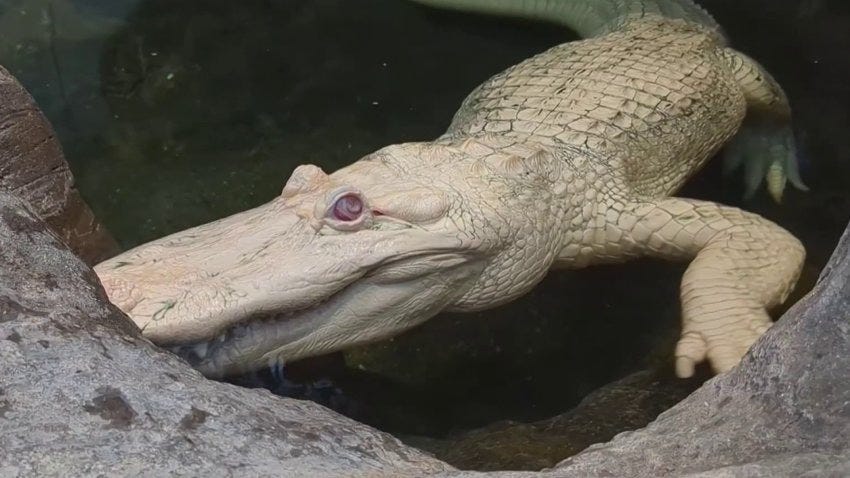
More sensationalist accounts go even further than describing mere colonies of alligators, some going so far as to describe sewer alligators as mutants. According to them, down in the dark and the filth, these alligators wouldn’t stay normal animals, however. Trapped in darkness and subsisting on rats and city refuse, these alligators were said to grow to unnatural sizes, their scales turning pale and albino. They’re eyes also turn milky and blind, something that apparently does nothing to make them less dangerous, though how the gators hunt without eyesight is not often elaborated on.
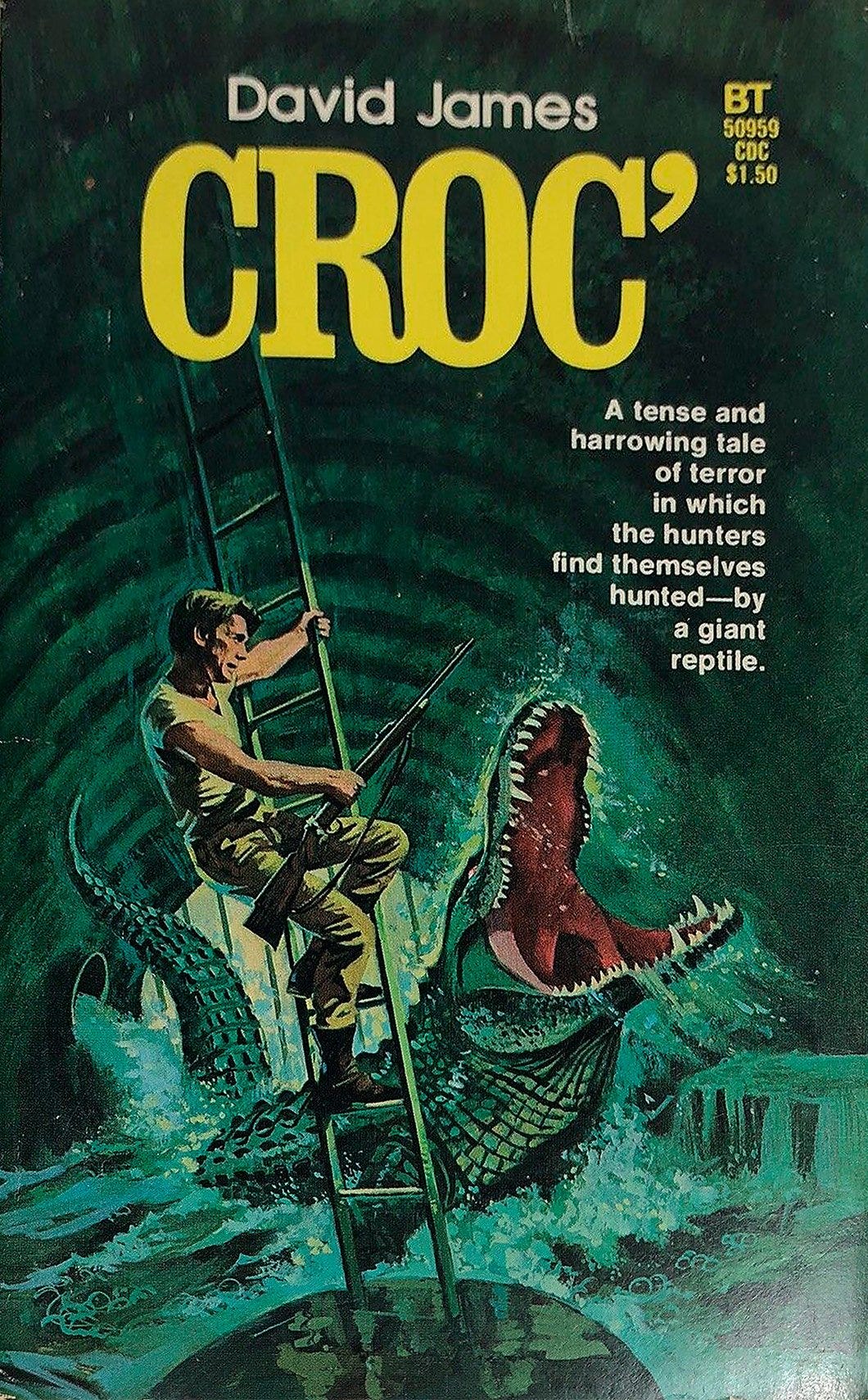
This rumour doesn’t appear to have a clear origin, but the influence is clear, inspiring popular culture and fiction as early as 1976, in the novel ‘Croc’, written by David James, depicting a tale of sewer workers being attacked by a rogue giant crocodile. Though not considered high quality, and more in the vein of pulp novels, this novel shows how the idea had captured the imaginations of fiction authors, no doubt contributing to the persistent rumours.
As might not be much of a surprise, there’s a great deal of biological reasons why entire colonies of mutated alligators living in sewers might seem far-fetched. Beyond the obvious question of how alligators would grow to unnatural sizes on a diet of rats and rubbish, alligators, like many reptiles, need to bask in sunlight regularly to aid their digestion, a factoid which makes it unlikely the average alligator would be able to survive long term in any sewer system, much less to the point of mutating into an albino.
Of course, no story is without any element of truth, and in fact isolated cases of alligators and crocodiles being discovered in sewage systems have cropped up over the years. In Paris, for instance, a Nile crocodile was discovered in the sewers under Pont Neuf bridge in 1984, even theorised to have been an exotic pet that grew bigger than the owner expected. Even as late as 2010, the NYPD did find a baby crocodile in the sewers under Queens, only around 2-ft long, and likely would’ve died during winter if it hadn’t been found.
In one state in particular, the stories of sewer alligators does in fact seem to be outright true, though not for any of the reasons mentioned. In Florida, many waste outlets actually connect to local swamps, the preferred habitat for alligators in the region. While they don’t go into these outlets as a matter of course, during the winter months, reports have arisen that alligators from these swamps will sometimes seek shelter in nearby drains, feeding off rats as a supplement to their usual diet. While this seems to only happen during winter or storms, this behaviour has been confirmed through the use of wildlife cameras near these drains (incidentally also proving Florida sewers are practically an ecology in their own right, housing over 30 species).
Which brings us back to the original, but nevertheless fascinating observation of nature’s ability to adapt to us. While the more fantastical claims of alligators living in sewers seem born from exaggeration and rumour, there seems a clear grain of truth that sparked the stories, quite possibly born from real discoveries of exotic pets carelessly cast aside by negligent owners. Even if not, the case of alligators in Florida show that, with qualifiers, alligators are able to use our sewers as shelter and hunting grounds.
Maybe this is more interesting than the stories of mutants and giant albino alligators. As much damage as we do to the planet around us, nature has proven more resilient than we sometimes give it credit for. Despite the disruption to their natural habitats, animals, from avian to mammal to reptilian, have all found ways to adapt to our presence, even taking our architecture and infrastructure and using them for their own benefit. Perhaps if any lesson is to be taken of these stories, it’s that nature always finds ways to adapt, and given what we’ve done to the natural world, perhaps pigeons crapping on our statues, foxes raiding our bins, and maybe even alligators prowling our drains is all fair consequence for our reckless expansion.
https://www.sewergator.com/lit/world_beneath_the_city.htm
https://tvtropes.org/pmwiki/pmwiki.php/Main/SewerGator
https://fathompress.com/blog/croc
https://theearfultower.com/2018/09/09/meet-eleonore-the-crocodile-found-in-the-paris-sewers-in-1984/
https://www.eaglehill.us/URNAonline2/access-pages/075-Ivory-accesspage.shtml